
OTA updates for a safer adaptive lighting system

Night driving always carries inherent risks. Due to limited visibility, every second counts for your safety on the road. With the advancement of technology, modern vehicles are now equipped with adaptive lighting systems that automatically adjust based on the environment.
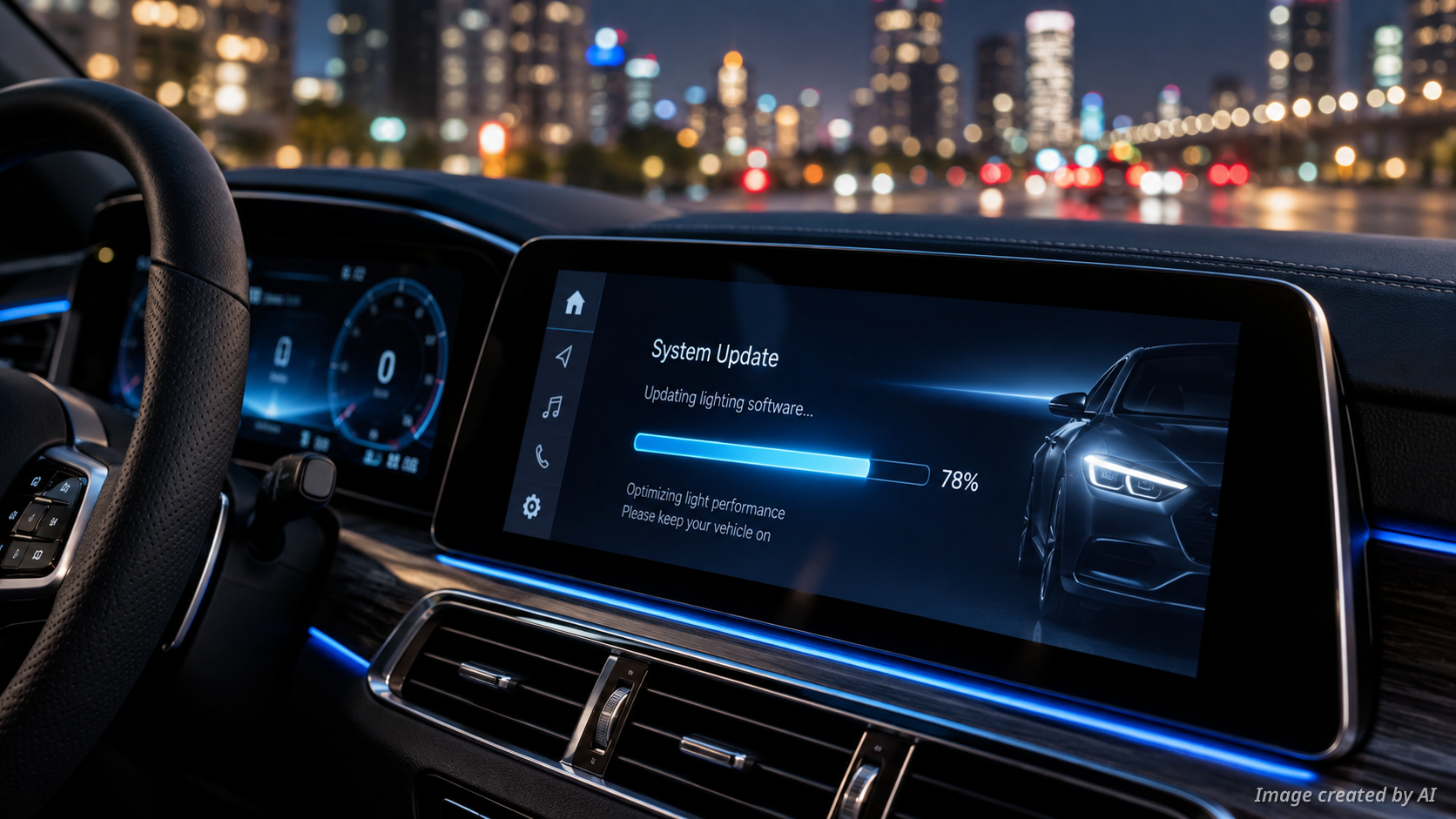
These systems are no longer static. Through over-the-air (OTA) updates, your vehicle continuously receives software improvements [2]. These updates ensure that your lights are always in optimal condition.
The importance of smart dimming for safety
One of the primary benefits of new updates is the enhancement of smart dimming. This technology helps save energy while maintaining sufficient illumination on the road [1]. By utilizing smart dimming strategies, the lifespan of vehicle lights and batteries is extended.
Drivers often experience eye fatigue when the surroundings are either too bright or too dark. OTA updates adjust the light intensity based on speed and road conditions, providing a more comfortable driving experience for everyone.
How OTA updates work in your vehicle
OTA updates are like updating your smartphone. You no longer need to go to a service center just to upgrade software [3]. The vehicle connects to the internet and automatically downloads the necessary patches. This is a significant step for the importance of electric vehicles with self-diagnostic capabilities.
This process is safe and fast. Manufacturers ensure that every update undergoes thorough testing before being released to users. As a result, your adaptive lighting system is always updated to the latest safety standards.
Maintaining safety on every trip
It is not just the lights that benefit from these updates. Many modern vehicles use sensors that interact with the lighting for a safer journey. For example, these systems can provide warnings if there are potential hazards nearby [4]. The use of advanced drive assistance provides an additional layer of protection.
Regularly checking for updates is part of responsible vehicle ownership. Do not let your vehicle become outdated. These updates are developed for your well-being and for the safety of other motorists.
Benefits of software updates
Many drivers ask why there is a need to update the lights. The answer is simple: technology is constantly evolving. Here are some reasons why OTA updates are important:
- Enhancing the detection of objects in the dark.
- Optimizing power usage for longer trips.
- Fixing software bugs that could cause improper lighting.
- Adding new features that increase visibility in bad weather.
These updates provide peace of mind. You know your vehicle is operating according to the latest technical standards [5]. This is especially important if you frequently drive in areas with poor street lighting.
The future of adaptive lighting
In the future, we expect the lights in our vehicles to become even smarter. Vehicles may communicate with each other to adjust light intensity without blinding others. Software updates will be the bridge to these innovations.
As drivers, we should be open to these changes. Embracing technology means safer roads for everyone. Don’t forget to check your infotainment system for any pending updates.
Conclusion
An OTA update for your adaptive lighting system is not just an option; it is a necessity. By keeping your vehicle updated, you ensure your safety and that of your family. Technology is here to help us drive with confidence even on the darkest nights.
Stay alert and always check your vehicle’s notifications. Every update is a step toward a safer and smarter way of traveling. Be prepared, stay safe, and enjoy every trip with the best technology at your fingertips.
More Information
- Smart dimming [1]: A technology that automatically changes light intensity based on environmental needs to save energy and maintain the correct level of visibility.
- OTA update [2]: The process of updating vehicle software wirelessly via the internet, eliminating the need for a physical visit to a service center.
- Adaptive lighting [3]: An intelligent lighting system that adjusts the direction and strength of the beam based on speed, turns, and road conditions for safer driving.
- Drive assistance [4]: Vehicle features that use sensors and software to assist the driver in lane keeping, collision avoidance, and speed adjustment.
- Software patch [5]: A piece of code designed to fix problems or update features in a software system for smoother operation.
Related Posts
-
 Uncategorized
Factors driving consumers toward electric vehicles
Read more →Currently, the transportation landscape in the Philippines is changing rapidly. Many consumers are beginning to shift from traditional gasoline-powered vehicles…
-
 Uncategorized
Why the use of electric vehicles is growing rapidly among consumers today
Read more →Currently, many of us Filipinos are beginning to change our perspective when it comes to choosing a vehicle. The rise…
-
Uncategorized
OTA updates for smart massage chair systems
Read more →Driving for long hours causes extreme physical fatigue. For drivers, having a smart massage chair is a significant help. These…